
July 26, 2026
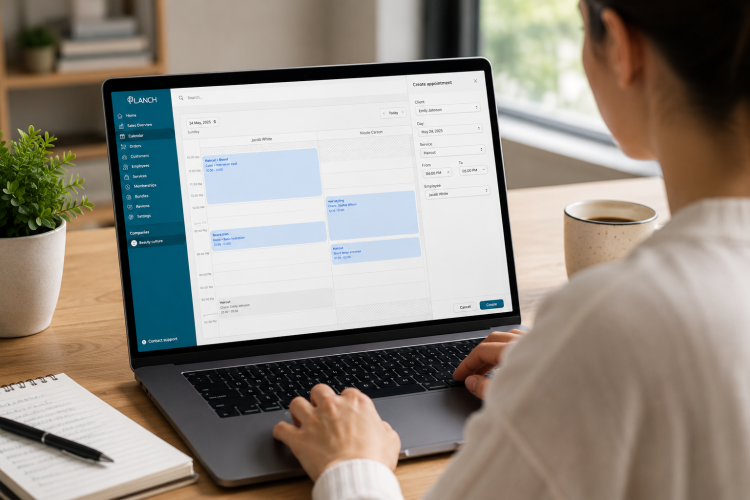
It's 8:47 AM. You've already replied to six Instagram DMs about appointment availability. Three Google Calendar entries conflict with each other. A client just texted asking to reschedule - again. And somewhere in your WhatsApp, a booking confirmation got buried under a thread about weekend plans.
You haven't done any actual work yet.
This is the daily reality for hundreds of thousands of service business owners across the United States - barbers, massage therapists, personal trainers, estheticians, tutors, consultants, and coaches - people who are genuinely great at what they do but are drowning in the administrative layer that surrounds it.
Here's the uncomfortable truth: the tools you're using to run your business were never designed to run a business. Instagram is a social network. Google Calendar is a personal organizer. WhatsApp is a messaging app. Duct-taping them together and calling it a "system" isn't a strategy - it's a slow leak that bleeds your time, your energy, and eventually your clients.
Automation changes that equation completely. And in this guide, we're going to walk through exactly how - with practical, specific, zero-fluff advice on what to automate, why it matters, and what kind of results you can actually expect.
Most service business owners dramatically underestimate how many hours per week they lose to manual administrative tasks. Let's run a quick honest inventory:
Responding to booking inquiries via DM or text - that's probably 30–45 minutes a day, minimum. Manually sending appointment reminders - another 20 minutes. Updating your calendar across platforms, chasing no-shows, re-confirming walk-ins, handling reschedules, following up after appointments to ask for reviews - by the time you add it all up, you're looking at 2 to 3 hours of purely administrative time every single workday.
That's 10–15 hours a week. Across a year, that's the equivalent of over six full weeks of work spent on tasks that don't require your expertise, your personality, or your skill - tasks that a well-configured software platform handles automatically, while you sleep.
Research into service businesses that implemented appointment scheduling software found that they typically saved 15–20 hours of staff time per week - time that was redirected toward revenue-generating activities and improved client experience.
For a solo operator or a small team, those hours aren't just productivity gains. They're the difference between burning out and building something sustainable.
Every no-show costs you twice. Once because the slot is empty, and again because you often can't fill it on short notice. For many service businesses, no-show rates without any reminder system in place hover between 15% and 30%. Multiply that by your average service price and the math gets uncomfortable quickly.
Businesses that implement automated reminder systems typically see a 25–35% decrease in no-show rates - representing substantial recovered revenue that directly impacts the bottom line.
The fix isn't chasing people down manually. It's a system that handles follow-up automatically: a reminder 48 hours out, another one the morning of the appointment, sent without you lifting a finger.
Here's a scenario that plays out constantly: someone finds your Instagram page at 10 PM on a Thursday, loves what they see, wants to book - and then has to send a DM and wait for you to reply. By morning, they've already booked with someone else who had a "Book Now" button right there on their profile or website.
Customers now prefer quick digital options rather than waiting for a phone call - and the businesses that adapt to this shift are capturing clients the others are invisibly losing.
Booking friction is silent revenue loss. You never see the leads that bounce because there's no instant booking option. You never know how many people checked your page, couldn't find a simple way to schedule, and moved on. Automation - specifically, online booking with real-time availability - closes that gap permanently.
"Automation" sounds like something that belongs in a warehouse or a software company. For a service business, it means something much more specific and much more human: it means your business keeps communicating, scheduling, and following up with clients even when you're in the middle of delivering a service, or off the clock entirely.
Automation for service businesses generally covers five core categories:
Appointment booking - clients self-schedule based on your real-time availability, without a back-and-forth conversation.
Reminders and confirmations - the system sends automated messages before appointments to reduce no-shows and keep clients informed.
Client management - your client history, preferences, and upcoming appointments are organized in one place, accessible instantly.
Payments - clients pay online at the time of booking, or the system processes recurring membership charges automatically.
Reviews and follow-ups - after a service is delivered, an automated message goes out prompting clients to leave feedback.
None of these require a full-time office manager. None require you to be glued to your phone. They run in the background, on schedule, consistently.
A lot of service business owners feel like they have a "system" because they're organized within these tools. But there's a critical distinction between organizing information and automating processes.
Google Calendar tells you when an appointment is. It doesn't remind your client. It doesn't block a slot when someone else books the same time. It doesn't log the appointment history against a client profile. It doesn't send a follow-up asking for a review.
Instagram DMs let people reach you. But every inquiry requires a human response, a manual availability check, a separate message to confirm, and another reminder the day before. That's four touch points per booking, entirely manual, every single time.
When you're running five appointments a day, five days a week, that's 100 manual interactions per week just to manage your schedule. Automation cuts that number close to zero.
The single highest-impact automation upgrade for most service businesses is online booking. Not "DM me to book." Not "call during business hours." A real booking page - with your services, pricing, availability, and a confirm button - that works 24 hours a day.
When a potential client lands on your booking page, they see:
Which services you offer and what they cost
Which team members are available (if you have staff)
Real-time open slots based on your actual calendar
A way to book and confirm in under two minutes
No calls. No DMs. No waiting. No friction.
The right scheduling software lets clients book appointments at their convenience, improving customer experience while simultaneously eliminating manual booking errors and saving your team significant time.
Platforms like Planch give you a ready-to-use booking website the moment you register - no technical setup, no developer required. Your clients get a clean, professional experience. You get bookings arriving in your calendar automatically, day and night.
The downstream effects are significant. Businesses that implement online booking typically see a 50–80% reduction in scheduling-related phone calls - which frees up your time and reduces the mental overhead of constant interruptions.
The math on automated reminders is straightforward: sending a reminder costs you nothing. Not showing up costs you the full appointment fee.
An effective reminder sequence for a service business looks something like this:
First reminder: 48 hours before the appointment - enough time for the client to reschedule if needed, which at least gives you the slot back.
Second reminder: The morning of the appointment - confirms the time, location, and any prep instructions the client needs.
Both of these go out automatically, without you writing a single message. The client feels taken care of. Your no-show rate drops. And you didn't have to do anything.
Planch's appointment notification system lets you set up to two customizable reminders per appointment, with full control over timing and message content. You set it up once and it runs indefinitely.
For businesses where no-shows are a consistent problem - massage therapy, personal training, tutoring, specialty beauty services - this single feature alone often justifies the switch to a dedicated platform.
Every time a client walks out of your door, you have an opportunity to serve them better next time - if you can remember what happened this time. Their preferences, the service they got, what they asked about for next time, when their last appointment was, whether they're due for a follow-up.
If that information lives in your memory, a notebook, or scattered across a thread of texts, it's effectively invisible. When you're with five other clients in a day, no one can retain all of that reliably.
A CRM - client relationship management system - captures that information automatically and makes it instantly accessible. When a client books again, you can pull up their history in seconds. You know what they had last time. You know their preferences. You can deliver a personalized experience that feels effortless on your end and exceptional on theirs.
Planch's client management tools give you a full profile for every client: order history, active memberships, upcoming appointments, and contact details - all in one place, updated automatically every time they interact with your business.
This isn't just a convenience feature. It's a retention tool. Clients who feel remembered and understood come back. Clients who feel like strangers every visit start looking for someone who makes them feel like regulars.
Collecting payment at the end of a service is one of those friction points that feels small but adds up. For businesses that charge online or run membership models, chasing payments manually - sending reminders, following up on missed charges, managing renewals - is exhausting.
Automation handles all of it. Clients pay online at the time of booking, which means you're paid before they even arrive. For memberships, the system processes recurring charges automatically on the renewal date. No invoices. No follow-ups. No awkward "hey, I never got your payment" conversations.
The right platform accepts payments securely via multiple channels, ensuring fast and streamlined transactions that benefit both the business and the client.
Planch's payment processing integrates directly with your booking flow, with zero transaction fees on online payments - meaning you keep more of what you earn, and your clients get a smooth checkout experience.
For businesses offering bundles or memberships, automated billing is the difference between a side income stream and a reliable revenue base you can plan around.
Online reviews are the new word of mouth. For local service businesses especially, your star rating and review count directly influence how many new clients find you and decide to book. And yet, most business owners either forget to ask for reviews or feel uncomfortable doing it.
Automation removes both problems. Set up an automated follow-up message that goes out a few hours after each completed appointment, thanking the client and inviting them to leave a review. The timing is perfect - the experience is fresh, they're happy, and the ask feels natural rather than pushy.
Planch's review system handles this automatically, collecting feedback on both individual employees and the business as a whole. Over time, this builds a review profile that works for you around the clock, attracting new clients who find you through search and social - without any active effort on your part.
If you have even two or three employees, scheduling becomes exponentially more complicated. Who's working when? Who's assigned to which service? Who's on vacation next week? Who can cover a cancellation?
Without a centralized system, answering these questions requires calls, texts, and a lot of back-and-forth. Mistakes happen. Shifts get double-booked. Clients get assigned to employees who aren't working that day.
Automated staff scheduling - where each employee's availability is visible in a shared calendar, clients can only book with available team members, and changes are reflected instantly - eliminates this entire category of errors.
Planch's calendar management gives both employees and admins real-time visibility into schedules, with Google Calendar integration so nothing gets lost between platforms. Employees manage their own availability. Admins maintain oversight. Clients only ever see slots that are actually open.
When a booking comes in, your employee needs to know. When it's rescheduled, they need to know that too. And when it's cancelled, they should find out immediately - not because someone remembered to text them.
Automated employee notifications handle all of this: instant alerts for new bookings, schedule changes, and cancellations. Your team stays informed without a group chat full of messages, and without you acting as the relay between the booking system and the staff.
The result is fewer miscommunications, smoother service delivery, and a team that shows up prepared because they always have current information.
As your business grows, not everyone on your team needs access to everything. Your front desk person needs to see the calendar. Your senior stylist doesn't need to see revenue analytics. Your newest employee doesn't need client payment details.
Role-based permissions let you define exactly what each team member can access, keeping sensitive data secure while giving everyone the visibility they need to do their job well. This is a feature that feels unnecessary until the day you need it - at which point it becomes critical.
Here's a mindset shift that matters: your website isn't a marketing expense. It's an automation tool. A well-built booking website works while you sleep, answering questions, showcasing your services, and capturing appointments from clients who would never pick up the phone to call.
For service businesses, the website needs to do a few specific things really well:
Show what services you offer and what they cost
Reflect your real-time availability
Let clients book and confirm in one flow
Look professional enough to build trust with a first-time visitor
Planch gives every registered business a free, professional booking website - with light and dark themes, a customizable image gallery, service listings, blog capability, and SEO optimization built in. You don't need a developer. You don't need a design background. You need about twenty minutes and a list of your services.
Once it's live, your website is a 24/7 booking engine. It doesn't take days off. It doesn't miss DMs. It converts interested visitors into confirmed appointments, automatically.
One of the underappreciated benefits of having a real business website is organic search visibility. When someone in your area searches "haircut near me" or "personal trainer in [city]" or "massage therapist open Saturday," they find businesses that have web pages. Not Instagram profiles. Not Google Calendar links.
A website with proper SEO - optimized page titles, service descriptions, location data, and fresh content - puts your business in front of people who are actively searching for what you offer, at the exact moment they're ready to book.
Planch's built-in blog feature lets you publish relevant content - tips, guides, service spotlights - that builds your search presence over time, without requiring you to become an SEO expert.
The most stressful kind of service business is one where every week starts at zero - you're only as good as the bookings that come in. Recurring revenue through memberships and service bundles changes that equation fundamentally.
A membership means a client pays monthly (or annually), automatically, in exchange for a set of services or perks. That revenue is predictable. You can plan around it. You can hire for it. You can invest in it.
Bundles work similarly - a client purchases a package of five sessions upfront, locking in their commitment and giving you immediate cash flow.
The challenge with memberships and bundles, historically, has been the administrative overhead of managing them: tracking who has what, processing renewals, handling add-ons. Automation removes all of that.
Planch's membership management system handles automated renewals, flexible subscription intervals (monthly, yearly, or custom), and add-on service integration - meaning your recurring revenue runs itself, and you spend your energy on serving members rather than managing subscriptions.
Bundle management works the same way: you create the package once, set the price, and the system handles the rest - tracking usage, applying credits, and making it easy for clients to purchase directly from your booking page.
Running a service business without data is flying by feel. You might have a sense that Saturdays are your busiest days, or that a certain service isn't selling as well as it used to, or that revenue has been up lately - but guesses aren't strategy.
Automated sales analytics give you the actual numbers: total revenue over any time period, average order value, number of appointments completed, most popular services, revenue by employee. You can see trends clearly, compare periods, and make decisions based on evidence rather than instinct.
Planch's sales analytics dashboard presents all of this in an intuitive visual format - no spreadsheet building required. You look at the dashboard, you understand your business, you make better decisions. That's it.
For a service business owner who's never had clean data before, this is genuinely eye-opening. You start seeing patterns you couldn't see before: which services drive the most revenue, which time slots are underbooked, which clients are your highest-value relationships.
"I'm not tech-savvy enough for this."
This is the most common hesitation, and it's increasingly outdated. Modern service business software is designed for people who run hair salons and yoga studios, not people with IT backgrounds. Setup takes an afternoon, not a week. If you can navigate Instagram, you can navigate Planch.
Book a demo and see for yourself - you don't need to take anyone's word for it.
"My clients prefer to text me directly."
Some do. But many more would prefer a simple booking page over a DM conversation, they just don't have the option right now. Once you give them a frictionless online booking experience, most clients adapt within one or two appointments. The ones who genuinely prefer texting can still text - the system doesn't prevent that.
"I can't afford software right now."
The math here is usually flawed. If your average service is $50 and automated reminders reduce your no-show rate by 25%, and you currently have two no-shows per week, that's $100 per week - $400 per month - in recovered revenue. Most scheduling platforms cost a fraction of that. And platforms like Planch offer a free trial so you can see the ROI before committing.
"I'll lose the personal touch."
Automation handles the logistics. You still deliver the service. The personal connection - the skill, the conversation, the relationship - that's yours. What automation removes is the clerical overhead that actually gets in the way of being present with your clients. Less time managing bookings means more energy for the work itself.
You don't need to automate everything at once. Here's a sensible sequence that builds momentum without overwhelming you:
Week 1: Set up your booking page. Get your services, pricing, and availability live. Share the link in your Instagram bio, your Google Business profile, and anywhere else clients find you. Start capturing appointments digitally.
Week 2: Configure your reminders. Set up two automated reminders per appointment. Watch your no-show rate over the next few weeks. The change is usually noticeable within 30 days.
Week 3: Import your existing client list. Get your client data into the CRM so you have a clean history going forward. This takes a few hours upfront but saves significant time over the long run.
Week 4: Set up your first membership or bundle (if applicable). If recurring revenue is something you've been thinking about, now is the time. The system handles renewals. You focus on delivering value.
Month 2 onward: Review your analytics. Look at what's working. Identify your busiest days, your most popular services, your highest-value clients. Start making decisions based on data rather than instinct.
This isn't a transformation that requires a full business overhaul. It's a series of small decisions, each one removing friction and returning time to you.
If you're a one-person operation - a freelance makeup artist, an independent personal trainer, a private tutor, a solo massage therapist - automation is especially valuable because you have no one to delegate admin work to. Every hour you spend on scheduling is an hour you're not earning.
A booking website, automated reminders, and a simple CRM can return 10+ hours per week to a solo operator. Those hours compound.
Multi-employee businesses gain even more from automation because they have a coordination problem on top of an administrative one. Staff scheduling, client-to-employee assignment, role-based access, team notifications - these all become significantly more complex with even two or three people. The right platform handles all of it.
Personal trainers, yoga instructors, and wellness practitioners often work with clients on recurring schedules and benefit enormously from membership automation. Monthly billing, automated renewals, package tracking - this is infrastructure that enables growth rather than limiting it.
Salons, barbershops, estheticians, and nail technicians deal with high appointment volume, multiple employees, and clients who have strong preferences about who serves them. Staff-specific booking, automated reminders, and review collection are the highest-value automations for this category.
Every hour you spend manually confirming appointments, chasing no-shows, or updating spreadsheets is an hour you're not spending with clients, improving your craft, or building the reputation that drives referrals.
Automation doesn't replace what makes your service business valuable - your skill, your personality, your relationship with clients. It removes the administrative layer that gets in between you and doing your best work.
The businesses winning right now aren't necessarily the most talented or the most experienced. They're the ones that have removed friction from their operations: they're easy to book, they show up reliably in search results, they follow up automatically, and they make clients feel remembered.
That's not magic. It's a system. And building that system is now more accessible than it's ever been.
Create your free website on Planch and see how much of your week you can get back. Or book a demo and walk through the platform with someone who can answer your specific questions.
The chaos is optional. The clarity is one decision away.
June 14, 2026
Experience all the benefits firsthand with no commitment. Unlock seamless management, increased client satisfaction, and streamlined operations today. Start your journey with us and see how our tools can transform your business!